Can Your Provider Prove Your Network Was Built for Business?

If your provider can't clearly answer questions about accountability, redundancy, and dedicated performance before an outage, they won't answer them after one either. See how your network measures up in under two minutes.

Seven questions. Under two minutes. The same due diligence your leadership team would expect, done in advance.

The Part Procurement 
Doesn't Show You

You probably didn't choose your current provider because it was the cheapest option. You chose them because they promised reliability. What you got instead was unexplained latency, tickets that bounced between departments, and SLA language that sounded reassuring until it actually mattered.

None of that showed up during procurement. It shows up now, and your team owns the consequences.

Every Outage Becomes Your Problem to Explain

Every unexplained slowdown creates another executive conversation you have to defend. Every outage forces your team to justify decisions that were made months, sometimes years, earlier. When a provider can't answer hard questions before an outage, they have even fewer answers after one, and by then your name is attached to the decision.

Redundancy that's never been tested under real failure is a hope, not a plan. A provider who goes quiet during an incident leaves you managing the outage and the fallout by yourself. Infrastructure nobody wants to replace because it's still technically working is one bad quarter away from becoming the reason you're explaining what happened.
For context, ITIC's 2024 Hourly Cost of Downtime Survey puts that figure at over thousands an hour for most mid-size and large enterprises. What leadership remembers a year later is whether you saw the risk coming and said so.

What Enterprise Accountability Actually Looks Like

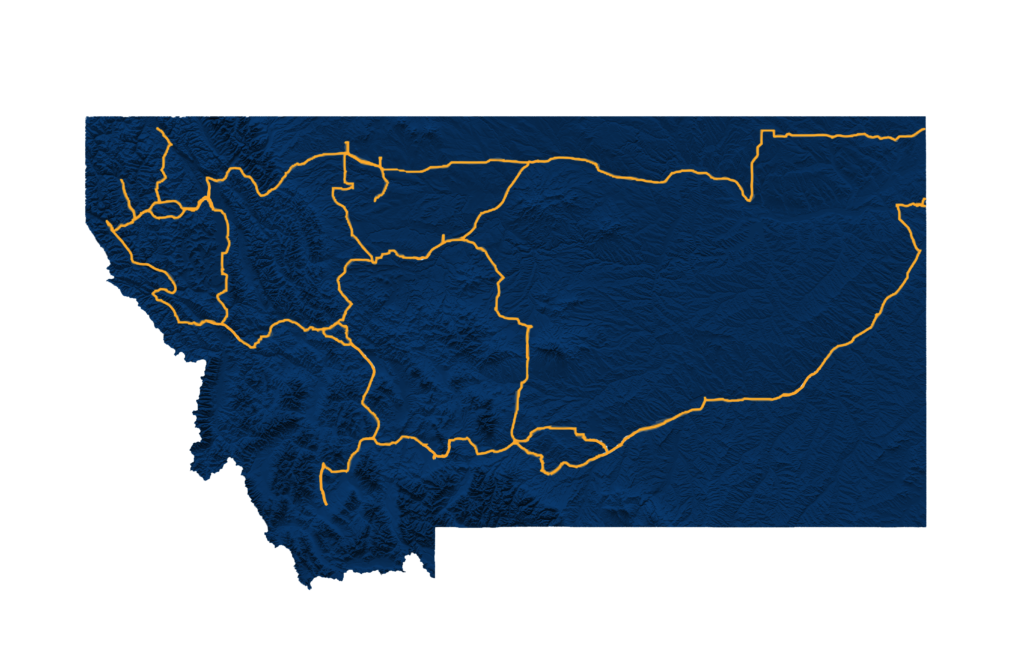
Consumer-designed infrastructure creates business risk you can't fully control, no matter how carefully you manage it internally. Vision Net operates Montana's only network engineered exclusively for business traffic, with the operational proof, not just the marketing language.
A named engineer with direct escalation ownership, not a rotating support queue
Physical redundancy that's tested and verified, not assumed until it's needed
Local Montana engineering teams who know the architecture, not a call center reading a script
A documented resolution path defined before anything breaks, so accountability isn't discovered mid-incident
That's engineered accountability, the kind a consumer-grade contract was never built to offer at any price. It's also built for Montana's geography: long distances between redundant paths and remote sites where a shared consumer network is often the only local option other providers plan around, not for.

Why This Matters Now

The pressure on enterprise networks hasn't stayed the same. Cloud dependence keeps increasing. AI-driven workloads are more sensitive to bandwidth and latency than the systems they replaced. Distributed and hybrid workforces expect the network to hold up, regardless of where people are working, and security expectations have climbed alongside all of it. Leadership increasingly expects zero unplanned downtime as the baseline, not the goal. Infrastructure that was adequate five years ago is now the exception being tested, not the standard being met.

Check Availability 
at Your Location

Business-only fiber is expanding across Montana's urban and rural markets. Enter your address to confirm availability at your location.
Check Coverage

The Questions Your Provider 
Should Already Be Able to Answer

Enterprise leadership eventually asks why a decision was made. The Business-Only Network Scorecard gives you the same seven questions in advance, so you're never the one caught without an answer.
Dedicated vs. Shared Performance
Can your provider guarantee your bandwidth, or is it shared with residential traffic down the block?
Provider Accountability 

When your network goes down, does your provider own the fix, or do you?
Score Your Network Free

Frequently Asked Questions

Business-only internet runs on infrastructure built and reserved exclusively for business traffic. It's never shared with residential or consumer service, so bandwidth, performance, and accountability aren't affected by traffic outside your organization.
Yes. Many business internet plans still run on the same physical network as residential service, just at a different price tier. Business-only fiber uses infrastructure that is dedicated end to end, so a business isn't competing with residential demand for bandwidth.
When business and residential traffic share the same network, available bandwidth shifts with total demand, not just your organization's usage. Peak residential hours, evenings and weekends especially, can reduce what's available for business use even when nothing changed on your end.
A meaningful SLA documents guaranteed uptime, defines what happens when that threshold is missed, and names who is accountable for resolution. An SLA without enforcement or a clear escalation path functions as a formality, not a guarantee.
Vision Net's business-only fiber network covers urban and rural markets across Montana. Availability varies by location. Use the coverage map to confirm service at a specific address.
According to ITIC's 2024 Hourly Cost of Downtime Survey, more than 90% of mid-size and large enterprises report that one hour of downtime costs over $300,000, and 41% report costs above $1 million per hour.
It's a free, seven-question self-assessment that scores a business network across dedicated bandwidth, SLA accountability, latency, symmetrical bandwidth, redundancy, capacity, and provider accountability. It takes about two minutes and doesn't require a form to see results.
IT leadership should be able to explain whether bandwidth is dedicated, whether redundancy has actually been tested rather than assumed, and who is accountable when the network fails. Those answers matter most after an incident, but they need to be established before one.
linkedin facebook pinterest youtube rss twitter instagram facebook-blank rss-blank linkedin-blank pinterest youtube twitter instagram