Exciting News: Rob Worden Elected to INDATEL Services Board of Managers
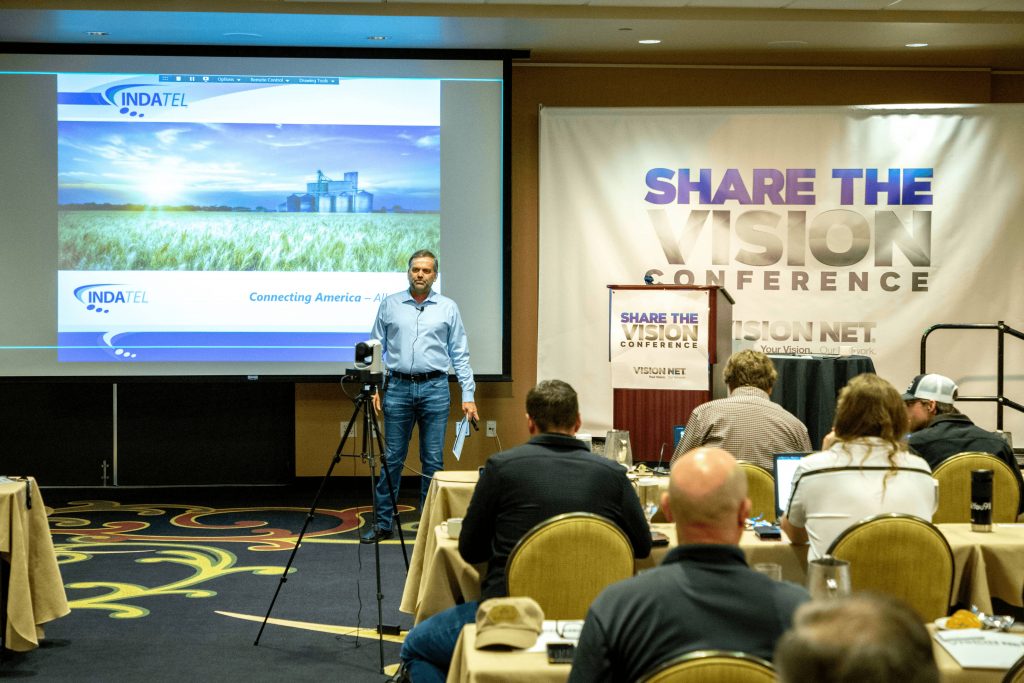
We are proud to share that Rob Worden has been elected to the INDATEL Services Board of Managers!
This achievement reflects Rob’s strong leadership and deep industry expertise. His appointment will not only strengthen Vision Net’s role within INDATEL, but also enhance our influence in advancing broadband connectivity across rural and underserved communities.
Rob’s strategic insight will play a key role in helping shape the future of broadband on a national scale.
Vision Net CEO Discusses the Future of Cybersecurity and Tech with KRTV
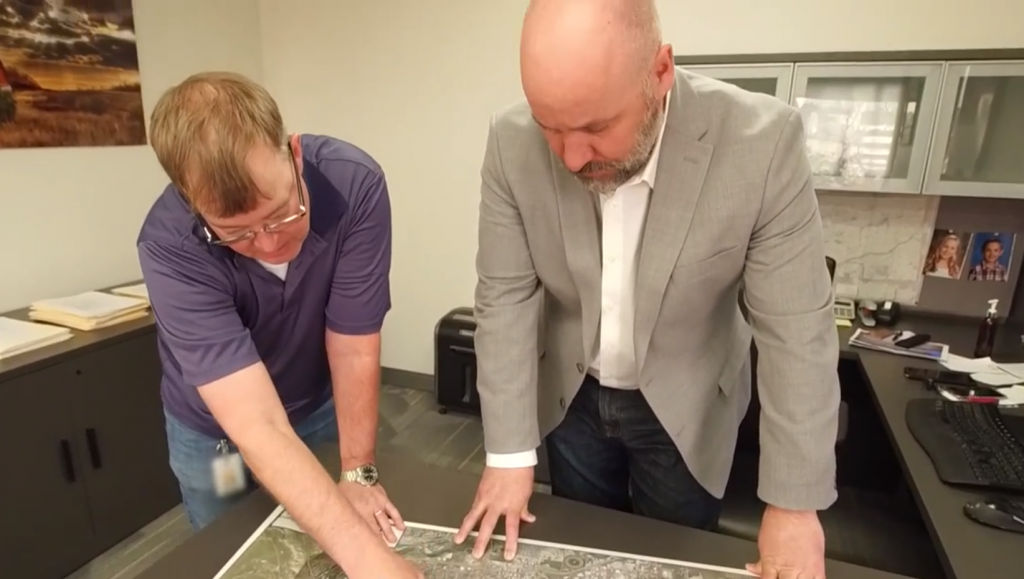
Our CEO Rob Worden recently sat down with KRTV to discuss the future of telecommunications and cybersecurity. This insightful interview provides a window into how Vision Net aims to enable businesses to thrive through transformative tech.
Watch the full interview below with Rob Worden to learn more about how Vision Net can help your enterprise safeguard critical systems, leverage technology, and reach new heights.
As acting CEO, it's my pleasure to write this end-of-year note, but before we say goodbye to 2022, I want to take a moment to thank everyone who has contributed—and continues to contribute—to Vision Net's success.
To our customers, thank you for trusting us with your business. You are why we show up, and it is truly our pleasure to serve you.
To our partners, thank you for collaborating with us. Your expertise enables us to prosper and grow while delivering our clients a comprehensive suite of solutions.
And last but certainly not least, to our employees, who are the lifeblood of Vision Net. There would be no company without you. I am grateful for all you do and the tenacity, grit, and compassion you display daily. Your commitment to our company culture of innovation, teamwork, and open communication is essential to our ongoing success. Undeniably, it "kept us firing on all eight cylinders" when CEO Corey Jensen retired in July.
The Year Ahead
As we look ahead to 2023, our focus is on growth, emphasizing three key areas. First, we are exceptionally well-positioned for multi-state expansion. Vision Net boasts a strong track record of partnering with regional businesses with properties in many states.
In 2019, for example, a client in the financial services industry chose Vision Net to design, build, and manage its private network of over 300 locations in 14 states. Vision Net won this contract through a highly competitive RFP process that considered solutions from numerous network providers, including many nationally recognized brands. Our deep industry experience, combined with a superior customer experience, set Vision Net apart. Our work with this financial institution continues today as we network the client's most recent acquisition.
Another example of our multi-state, multi-location proficiency is our partnership with a regional retail outfitter. The company is leveraging Vision Net's expertise to provide SD Wan connectivity across its storefronts in ID, WA, and MT and loss prevention in its two warehouses.
Wholesale Carrier Services (formerly the Transport department) is another growth target. Today's ever-increasing bandwidth demands bring unprecedented changes to our industry and the many carriers that need reliable, scalable bandwidth. Vision Net's Wholesale Carrier Services pairs the capacity and capabilities needed to support carriers' rapid growth with a 5,000-mile, statewide fiber optic network. We complement this with connectivity throughout the United States and Canada, enabling us to deliver flexible scalability to our clients.
Lastly, security presents another tremendous opportunity as it continues to be a critical priority for businesses. We've all read or heard stories about aggressive cyber-attacks at larger—usually well-known—enterprises. But small and medium-sized companies are, in many cases, at even greater risk due to having fewer resources and less staffing. Vision Net can bolster a firm's existing security/IT department with additional support and expertise, or we can provide a complete end-to-end security solution. Leveraging our Vision Secure suite of services, the Vision Net team works with businesses of all sizes to review security vulnerabilities and ensure systems remain bolstered against ransomware and other cyber-attacks.
I began this letter by thanking all who play a role in Vision Net's success, and I'll finish by singling out Vision Net's Board of Directors and our owners. For those who don't know, Vision Net was started in 1995 and is wholly owned by nine rural telephone companies. The leaders of these firms serve as a north star for our business, steering growth while overseeing corporate activities. I like to say that this community-centric ethic is a big part of "how Vision Net was raised." It's why our relationships with the companies we support and the cities and towns that house them are vital to our work. I'm pleased to share that Vision Net's community investments will continue in 2023 with our sponsorship of Montana Special Olympics, financial support for the always-popular Billings Airshow, and a dedicated river cleanup day with Sun River Watershed Group.
From all of us at Vision Net, Merry Christmas and Happy New Year!
It's hard to believe that we are at the end of yet another year. December is a time of deep reflection for many of us, an opportunity to review where we've been and what we've done while looking ahead to the new year and all that we hope to achieve.
I think it's fair to say that the past two years have been trying. Individuals, families, and businesses have adapted to a new normal ushered in by the coronavirus. Many of the changes the pandemic wrought have been difficult, but I've been impressed with people's ability to rise to the occasion, embrace new opportunities, and, often, exceed expectations.
This certainly holds true for Vision Net. As I take stock of the past year, I'm struck by the continued dedication, hard work, and excellence demonstrated by our employees. In our now 26-year-history, the operational and financial performance has never been greater at Vision Net. I am incredibly proud of this achievement. Underpinning this extraordinary success is a strong company culture of teamwork, self-reliance, and mutual respect. The Vision Net culture manifests itself across our high-functioning teams where tenacity and agility are encouraged and supported.
Agility—or more pointedly, the ability and willingness to pivot—has proven time and again critical to our success. A few years ago, we made the hard decision to exit two long-time business lines. Both had been central to our business model for decades. It would have been easy to stay the path, but the world—and the needs of businesses operating within it—was changing. To remain relevant—and quite frankly, solvent—we had to pivot away from what had become a low-margin business to higher demand and higher-margin products.
These were not easy decisions, but they were the right decisions for the longevity of our business. I take great pride in our employees' willingness and ability to move swiftly to capitalize on these market changes while avoiding the self-defeating argument: "But we've always done things this way." If I've learned one thing from the past two years, it's that the status quo is never assured.
Looking ahead to 2022, I see changes on the near horizon brought about by the pandemic. More than ever, our clients are seeking simplicity. One example of this is the positive feedback on the Vision Net invoicing system that provides one easy-to-understand page rather than pages and pages of complex terminology. We want to make life easier for our clients however we can. And while this may seem like a funny thing to single out, I think it captures the sentiments of many: after two highly demanding years, the simpler, the better. For me, this is a bellwether of a growing demand for ease of use across all touchpoints.
As the pandemic continues to impact us, constantly shifting how and what we perceive to be our new normal, I think this idea of simplicity has tremendous value. Let's make things easier for our clients, not harder. Let's take some stress off their plates however we can. Baking it into the Vision Net experience—both for customers and our teams—is the goal that will guide us into the new year.
INDAVision: The dynamic team invested in rural and urban fiber
Tell us about INDATEL With the purpose of showcasing statewide networks on a national basis, in 2002, 3 independent networks came together and started INDATEL. Bringing together these networks, the intention was to a promote the value of rural broadband that's become so much more important over the last 2 decades. In fact, next year, INDATEL will celebrate our 20th year! Today, we have 32 member owners with 17 of those being actual equity owners. They are comprised of more than 700 independent local operators across 32 states. That continues to grow our ability to develop broadband in those rural spaces, with the fiber builds and government support that help build and fulfill those opportunities, bringing improved broadband to under and unserved areas.
The mantra of INDATEL from those initial statewide founding networks and individuals to the 32 we have today is about providing value to our member owners, and each of the member owners invest in INDATEL annually. We take those investments and look to co-brand, co-market, and bring awareness and exposure at a national level. Most important are the national contracts that most of the statewide networks couldn’t garner for themselves, such as national government accounts that we’ve begun to fulfill from over 100 locations.
How has the INDATEL/Vision Net partnership benefitted both company’s clients? Today, INDATEL is working our way toward government sales and direct enterprise sales as we continue to grow and build on advanced and diversified models with revenue streams. The value to the member owners has been in initially providing lower cost solutions at a national level and electing those services to stay at local levels. The biggest content these days is known as hyperscale players like Netflix, Google, and national aggregation POPS (Point Of Presence Site) throughout the country. INDATEL connects customers in multiple locations in multiple states throughout the country through our carrier ethernet.
Tell us about the partnership between INDATEL and Vision Net? I'll give you an example that ties directly to Vision Net; at the very first carrier Ethernet type of solution was from Big Sky Montana to Missouri at 10mg circuit tying two medical facilities together. Previously, when you tried to do that on a national basis, there wasn’t a single national player that can put that together. INDATEL, through its family of networks connected those two via Ethernet 10mg service.
With Vision Net in Montana, that fulfilled the need to have a local player to meet INDATEL in Chicago and the aggregation router to our Missouri member. This was the perfect example of a medical organization connecting their facilities that wouldn’t have been possible under one single carrier and that's the beauty of INDATEL; bringing one to many. Bringing one solution by using many players; bringing one contract, one bill, one point connection, and one hand off.
I would categorize INDATEL as the largest national rural broadband aggregator. There's no other company that, at this point, can touch the number of miles of fiber that we have in that space. With over 5,000 miles of fiber, I think it's more like we have over one million on net Internet buildings identified. We work with over 5,000 communities and 19 national aggregation POPS.
What projects have both companies completed together, and what were the results? There are projects or initiatives that bring value to INDATEL; projects that lead into automation efforts and projects that have provided value. Salesforce.com is probably the most recent one where that was the driver of our automation from quote, service, delivery, and building customized software that members of our statewide networks in the local independent operators can take advantage of at a much-reduced price. INDATEL members such as Vision Net bring new opportunities and projects to the forefront, like helping us determine if there is a groundswell that could garner value and something that INDATEL could take forward in the national level.
What is the vision and mission of the Indatel/Vision Net partnership? INDATEL’s history with Vision Net is deep and impressive. I have to single out Corey Jensen; he has been on INDATEL’s board for 12 years and he was President for six years and after a short hiatus, recently returned to the board. In the early days of INDATEL, he was instrumental in building the first aggregation route from Chicago and worked in billing and other elements getting the problems solved and helping INDATEL get off the ground so that in 2013, we could have permanent employees. The commitment that Vision Net provided in those early days and the amount of time and extra time spent on INDATEL from Vision Net is incredible and it really gets to the deep roots of being in the rural space. Knowing Corey personally, his background and mine are very similar in that nature and that's the fabric of INDATEL tat comprises the work and that mindset, that integrity, that level of effort and commitment is inherent in and folks who have spent their time and background in rural spaces.
If I had to sum up in a word, the partnership between INDATEL and Vision Net, I would call it INDAVision. That is how closely we are tied together and that's how closely we are tied into making this model work in the space we are in today.
What do you see for the future of both Indatel and Vision Net? I think goes beyond what we what we will do today, certainly in terms of automation and the type of revenue that we're driving today. As I mentioned, we’re an exclusively wholesale carrier, but looking at ways that we can work with our member owners and independent owners on building fiber at all levels; last mile, middle mile, and long mile. We’re looking at how to drive revenue from actually building fiber or installing fiber in the ground, so more to come on how that may work and what our efforts will materialize into. But we’re looking at additional ways to drive revenue, drive value, drive fortunes, and bring those opportunities to member owners to help them monetize fiber networks.
Vision Net keeps businesses secure, and helps Montana get back to business
Vision Net is proud of our growth and innovation that has allowed businesses to thrive for over 26 years. Learn how our company has grown with the vision of our shareholders and CEO to become a leading Montana company. Read the full article from the Billings Gazette on Vision Net's role in getting Montana Back to Business!
Weighing the Advantages of 5G: What’s in it for rural states?
A friend reached out to me recently asking about 5G and what it could mean for his business. His question was timely, and it’s a topic I’ve been thinking about quite a bit lately. You can’t turn on the TV, scan social media or open a newspaper or magazine without facing a litany of ads touting 5G as the next best thing.
But is 5G all it’s cracked up to be? And if it is, what does it mean for those of us living and working in a rural state like Montana?
Let’s start with the basics. 5G mobile network technology is the next iteration of wireless connectivity, designed to deliver faster and more reliable service. Notice the word mobile. Like its predecessor 4G, 5G is the connection between a tower and your device, be it a cell phone, smartwatch, or tablet. Proximity to that tower is critical. The best estimates suggest that you need to be within 1,500 feet of a tower to fully reap the rewards. The best scenario—and the one touted most often—is that 5G promises a futuristic landscape of autonomous cars, enhanced machine-to-machine communication, and manufacturing plants run entirely by AI-controlled robots. If it all feels a little bit like Star Trek meets the Jetsons, that’s because it is.
Building out a 5G network and the many towers required to support it won’t be cheap. Large mobile wireless carriers will need to ask themselves if it makes financial sense to invest in this infrastructure in less densely populated areas where usage will be low. More specifically, how long will it take to earn back that investment and begin reaping a profit? It doesn’t take an MBA to realize that for many of these companies, the better investment will be in larger, more densely- populated urban areas.
If this sounds like bad news, let me offer some good news.
The Federal Communications Commission (FCC), through several funding mechanisms, is funneling billions of dollars into shoring up broadband services in rural America. This means that high-speed broadband fiber will soon be accessible to large swaths of rural areas. For many Montanans, this presents a significant improvement over what they’ve been relying on, which is often spotty connectivity and slower speeds. Plus, fiber is ideal in rural settings because the signal doesn’t degrade as it moves away from its source. In other words, there’s no need to be close to a cell tower.
This strengthens the case for fiber in rural settings. Vision Net has already made key fiber investments in Helena and Billings to address exactly these issues, providing a fast and reliable connection for businesses and schools in the area.
This isn’t to say 5G won’t eventually arrive in Montana, but it does seem likely that rural states such as ours may be a bit further down the receiving line. And when it does arrive, you can count on the urban areas of Montana getting 5G well before our rural communities.
In all reality, a mix of fiber and 5G wireless-based broadband will be available across our state for all to utilize. For example, a bank would rely on fiber to run its operating and business processing systems internally, while client-facing services that use apps and websites might leverage 5G to provide a rich customer experience.
So, how will you position your business for this upcoming revolution?
Whether it’s fiber, 5G, or both, my advice is to think through how your business can monetize these bandwidth and connectivity improvements and how best to position your firm to be ready for them when they arrive. In my friend’s case, warehouse automation may provide a much-needed solution to his ongoing challenge to fill empty factory positions.
Another suggestion is to observe how others in your industry are already leveraging broadband and begin formulating your own plan from there. Farmers and ranchers across Montana, for example, may want to look at how drones and other broadband technologies are positively impacting the ag industry, with better monitoring systems for land, livestock, and irrigation that deliver improved efficiencies and cost savings.
And you may want to ponder this question: What are some fiber-backed internal processes that could be implemented to support new technology opportunities when they arrive?
Thomas Edison said “Good fortune is what happens when opportunity meets with planning.” I think it’s fair to say opportunity abounds in the telecom space. Planning for both the short term and long term will be key to meeting this opportunity head-on.